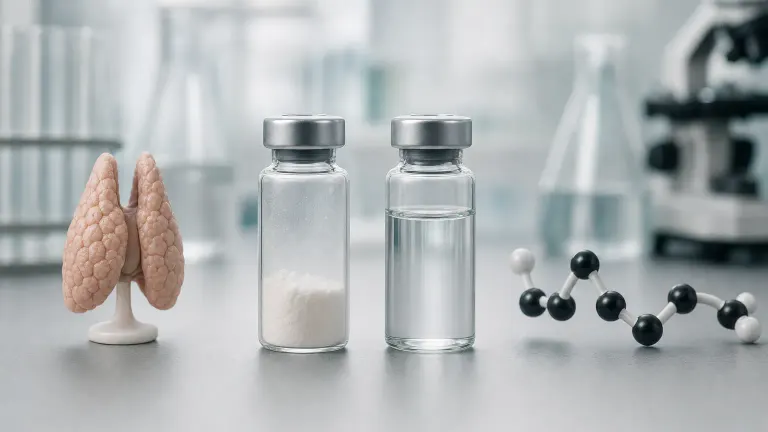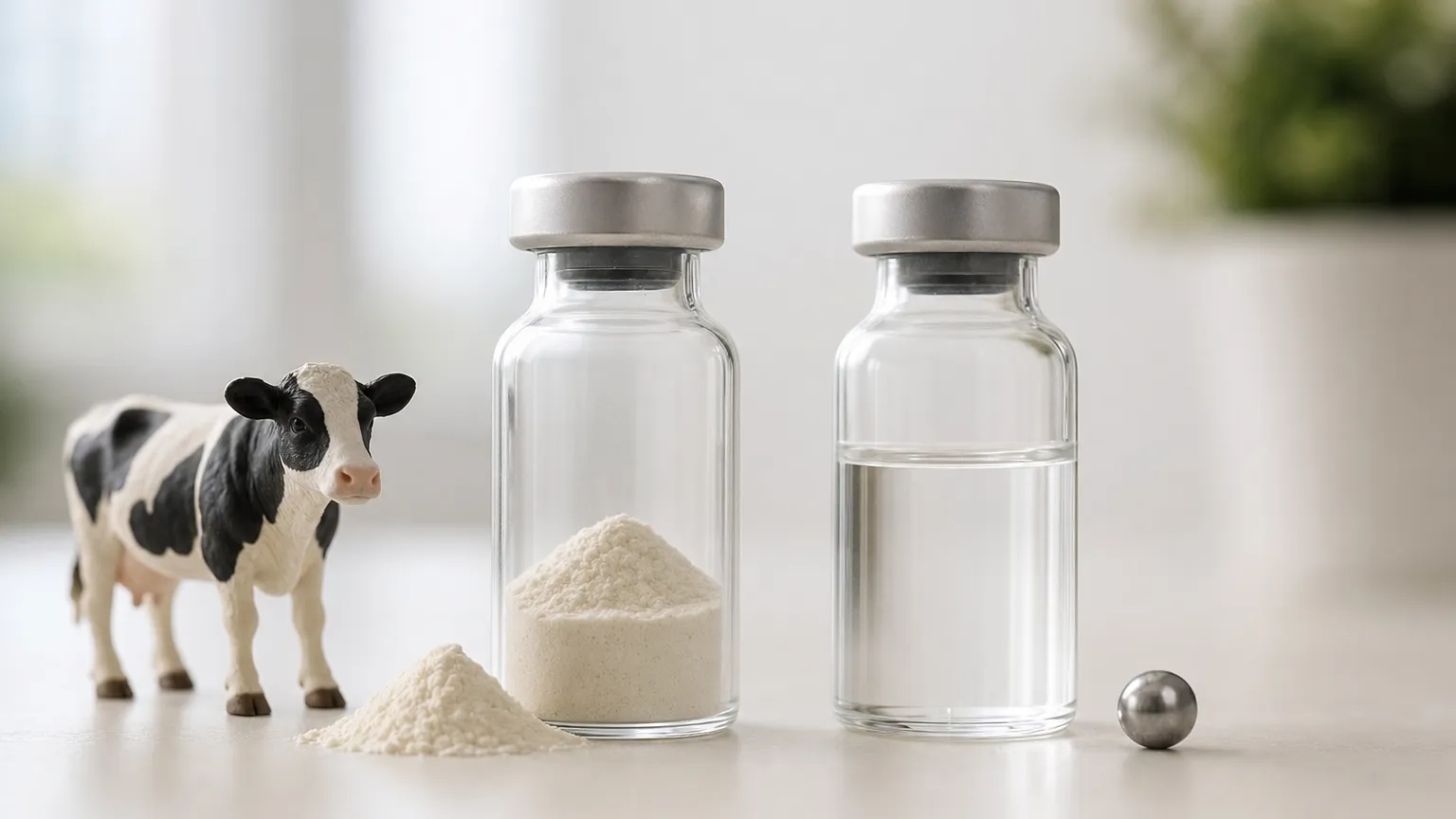
Thymalin vs thymulin is mostly a case of similar names for different substances. Thymalin is a mixture of peptides extracted from calf thymus and sold in Russia as a prescription injection for weakened immunity.[1] Thymulin is a single natural hormone, nine amino acids long, made by cells of the thymus, and it only works when bound to zinc.[2][4] They were discovered by different research groups, have different evidence, and neither is FDA-approved.[15]
This guide explains what each one is, how their research and doses differ, and their legal status. For background, see our thymalin and thymulin profiles and the longevity peptides hub.
At a glance
| Thymalin | Thymulin | |
|---|---|---|
| What it is | Peptide extract of calf thymus[1] | One 9-amino-acid hormone bound to zinc[2] |
| Made by the body? | No; extracted from cattle thymus[1] | Yes, by thymic epithelial cells[4] |
| Who developed or found it | Morozov and Khavinson, St. Petersburg[3] | Bach, Dardenne and colleagues, France[5][6] |
| Approved as a medicine | Russia, prescription[1] | Nowhere we found |
| Main human evidence | Russian developer studies[8][9] | Small French trials in the 1980s[11][12] |
| FDA 503A status | Not on any list[15] | Category 3, nominated without adequate support[15] |
Why the names get mixed up
Both names come from “thymus,” and both substances are connected to the immune system, so they are easy to confuse. The searches “thymalin thymulin peptide” and “thymalin vs thymulin” usually come from people trying to work out whether they are the same product. They are not.
- Thymalin is a brand-like name for a Russian medicine made from cattle tissue.[1]
- Thymulin is the scientific name for a hormone first described as serum thymic factor, or FTS (from the French facteur thymique sérique).[5][6]
What thymalin is
Thymalin was made by mild acid extraction of small peptides from calf thymus and was put into medical practice as an “immunocorrector”.[3] The current Russian product contains 10 mg of thymus extract from calves and young cattle under one year old, with glycine, in a vial that is dissolved and injected into a muscle.[1]
Because it is an extract, it contains many peptides. Its developers report that two dipeptides, Lys-Glu (KE) and Glu-Trp (EW), are active substances of thymalin.[7] Glu-Trp was isolated from thymalin and later made synthetically as a separate Russian drug, Thymogen.[3]
What thymulin is
Thymulin is a hormone produced only by the epithelial cells of the thymus.[4] French researchers characterized it in 1977 as serum thymic factor.[5] In 1982, the same group showed that the peptide lost its activity in a lab test when metals were removed and regained it when zinc was added back, with one zinc per peptide working best. They proposed the name thymulin for the active, zinc-bound form.[6]
Thymulin helps T cells mature and adjusts the activity of different T-cell groups.[2] A 2009 review also describes links with the pituitary and anti-inflammatory and pain-relieving effects in the brains of animals.[4]
Because it depends on zinc, thymulin activity falls when zinc is low. In a US study of mildly zinc-deficient adults, serum thymulin activity dropped and was corrected by zinc supplements.[13] That study gave zinc, not thymulin.
The evidence compared
Thymalin
- Older adults: in a study by the developers, 266 older people were followed for 6 to 8 years. The authors reported 2.0- to 2.1-fold lower death rates with thymalin, but the abstract does not say how people were assigned or how many died.[8]
- COVID-19: in a single-center, open-label trial of 92 hospital patients in St. Petersburg, adding 10 mg of thymalin daily for 5 days was linked to faster falls in inflammation markers. No one died in either group.[9]
Thymulin
- Immunodeficient children (1982): three children with immune defects were given synthetic FTS by vein. Doctors reported fewer and milder infections and better immune tests; in two, the gains faded when treatment paused and returned when it restarted.[10]
- Rheumatoid arthritis (1987): two randomized, double-blind, placebo-controlled trials compared 1, 5 and 10 mg a day of a synthetic form called nonathymulin. At 5 mg, 56% improved on an overall assessment, compared with 17% on placebo.[11]
- Multiple sclerosis (1989): 40 patients received nonathymulin or placebo under the skin for 6 months. There was no difference in disability or walking scores, and the authors concluded it was not effective.[12]
- Hair: a 2012 laboratory study on human scalp hair follicles reported that thymic peptides affect follicle growth in different ways. It was not a treatment trial in people.[14]
Dosing compared
| Thymalin | Thymulin | |
|---|---|---|
| Approved dose | Adults 5 to 20 mg into a muscle daily, 3 to 10 days[1] | None |
| Doses in human studies | 10 mg daily for 5 days (COVID-19 trial)[9] | 1, 5 or 10 mg a day in rheumatoid arthritis; under the skin in MS[11][12] |
The two doses are not interchangeable: thymalin’s milligrams are of a mixed extract, while thymulin’s are of one defined peptide. For details, see our thymalin dosage guide. A clinician sets any dose.
Side effects compared
- Thymalin: the Russian label lists allergic reactions, and the medicine must not be used in pregnancy or breastfeeding.[1]
- Thymulin: the rheumatoid arthritis trials reported minimal adverse effects, and no significant side effects were recorded in the MS trial.[11][12]
These trials were small and short, so rare or long-term risks are unknown for both.
Legal status
- Thymalin: a registered prescription medicine in Russia.[1] It is not FDA-approved and does not appear on any of FDA’s 503A bulk substance lists as of May 14, 2026.[15]
- Thymulin: not approved as a medicine anywhere we found. Thymulin acetate sits in FDA’s 503A category 3, substances nominated without adequate support, as of May 14, 2026.[15]
In our reading, neither is eligible for compounding by a traditional 503A pharmacy. Products sold online under either name are not checked by FDA for content or sterility. For how these rules work, see 503A vs 503B compounding.
Related comparisons
Thymalin is also often compared with a third thymus peptide; see thymalin vs thymosin alpha 1. Thymulin is sometimes grouped with the Russian bioregulators, but it was discovered separately; see our guide to Khavinson peptide bioregulators. For a wider view, see best peptides for immune support and best peptides for longevity.
Questions to ask a clinician
- Which product is this exactly: the Russian thymalin extract, or synthetic thymulin?
- What condition is it meant to treat, and what evidence supports that?
- Is my zinc level worth checking first?
- Is there an approved treatment with stronger evidence?
This is general information, not medical or legal advice.