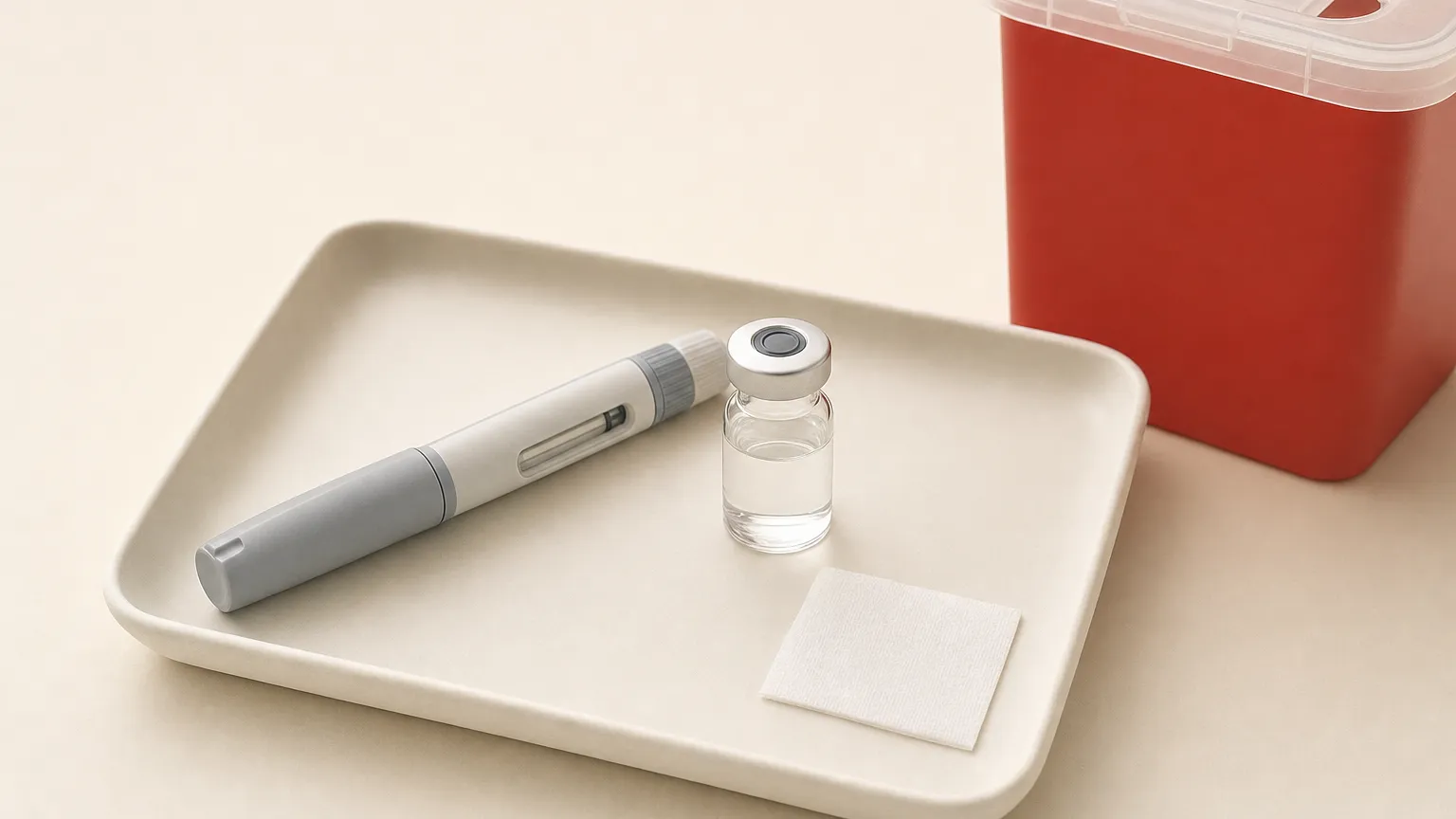
Quick answer: peptide injections deliver peptide medicines, usually just under the skin, because most peptides are digested and poorly absorbed if swallowed.[1] Several are FDA-approved, including tirzepatide (Zepbound, Mounjaro), semaglutide (Ozempic, Wegovy), tesamorelin and bremelanotide.[2][3][4] Many peptide injections sold by clinics and websites, such as BPC-157 and TB-500, are not approved, and FDA has found little or no human safety data for them.[7]
This guide covers the main types, what they are used for, side effects, risks and the legal status in 2026. For background, see our peptide basics hub.
Why are peptides injected?
Peptides are short chains of amino acids. In the gut, they face digestive enzymes, and their size and electrical charge make it hard for them to cross the intestinal wall. As a result, oral peptides usually reach the bloodstream at low single-digit percentages.[1] Injection under the skin bypasses the gut.
Chemists have made a few peptides work as pills by changing their structure and formulation; oral semaglutide (Rybelsus and Wegovy tablets) is the best-known example.[1][12] For most peptides, though, injection remains the practical route. Our guide to oral peptide delivery explains the science, and peptide nasal spray vs injection covers another option.
Types of peptide injections
FDA-approved peptide injections
| Drug | What it is approved for | How it is given |
|---|---|---|
| Tirzepatide (Zepbound) | Weight reduction; moderate to severe sleep apnea with obesity | Under the skin, once weekly[2] |
| Semaglutide (Wegovy) | Weight reduction; heart risk reduction; MASH liver disease | Under the skin, once weekly[12] |
| Tesamorelin (Egrifta WR) | Excess abdominal fat in adults with HIV and lipodystrophy | Under the skin[3] |
| Bremelanotide (Vyleesi) | Low sexual desire (HSDD) in premenopausal women | 1.75 mg under the skin, as needed[4] |
| Elamipretide (Forzinity) | Muscle strength in Barth syndrome | 40 mg under the skin, once daily[5] |
These drugs were tested in clinical trials, and FDA reviewed their manufacturing. You can read more in the profiles for tirzepatide, semaglutide, tesamorelin, PT-141 (bremelanotide) and SS-31 (elamipretide).
Unapproved peptide injections
Clinics and online sellers also offer injectable peptides that are not part of any approved drug:
- BPC-157 and TB-500, marketed for injuries. A 2026 review for orthopedic surgeons found BPC-157’s tendon and muscle benefits largely unvalidated in humans, and no human orthopedic data for TB-500.[9]
- CJC-1295 and ipamorelin, marketed to raise growth hormone. FDA has identified serious adverse events possibly associated with CJC-1295, including increased heart rate.[6]
- MOTS-c, marketed for metabolism and energy. FDA found no studies in which it was given to people.[7]
- Injectable GHK-Cu, marketed for skin and healing. No clinical data support it for musculoskeletal conditions.[9]
Where peptide injections are given
Most peptide injections go into the fatty layer under the skin (subcutaneous). The Zepbound label, for example, directs injection into the abdomen or thigh, or the back of the upper arm if another person gives it.[2] Vyleesi is injected into the abdomen or thigh.[4]
For technique, see how to inject peptides subcutaneously and subcutaneous vs intramuscular injection. Used needles belong in a sharps container; our guide on how to dispose of needles explains the options.
Side effects of peptide injections
Side effects depend on the peptide.
- Injection-site reactions. Redness, itching or soreness where the needle went in are common. For elamipretide, injection-site reactions are the most common side effect on the label.[5] See peptide injection site reactions.
- Drug-specific effects. GLP-1 injections mainly cause stomach and bowel symptoms. In Wegovy’s weight-loss trials, nausea affected 44% of people versus 16% on placebo.[12]
- Unapproved peptides. For these, human side-effect data mostly do not exist. FDA’s adverse event database included a few BPC-157 reports, among them injection-site redness and swelling and a case of shortness of breath that led to an emergency visit; FDA said it was unclear whether BPC-157 caused them.[7]
Risks of unapproved peptide injections
- Immune reactions. FDA says injected peptides may trigger immune responses, especially when impurities or clumped peptide are present.[6]
- Unknown contents. FDA judged the TB-500 and MOTS-c substances it reviewed “not well-characterized,” with no data on impurities or bacterial contamination.[7]
- Contamination after opening. FDA generally recommends using multi-dose vials of sterile medicine within 28 days of first use, because contamination risk rises after that.[8]
- Long-term harms. A 2026 review lists contamination, inaccurate dosing, abnormal blood vessel growth and cancer promotion among the potential risks of unregulated injectable peptides.[10]
Are peptide injections legal?
- Approved peptides: legal with a prescription, filled by a licensed pharmacy.
- “Research use only” sellers: FDA has warned companies that sold peptides such as semaglutide and retatrutide labeled “for research purposes” or “not for human consumption” with dosing instructions. FDA urges consumers to buy only from state-licensed pharmacies.[8]
- Compounding: FDA staff recommended in July 2026 against allowing pharmacies to compound BPC-157, KPV, TB-500 and MOTS-c.[7] FDA’s advisory committee voted narrowly the other way, but the votes are not binding, and as of a July 31, 2026 report none had been added to the list of allowed substances.[11]
See are peptides legal and research use only peptides for more.
Who should be especially careful
- People with a cancer history. A 2026 review raises theoretical concerns that some unapproved peptides promote abnormal blood vessel growth or cancer.[10] These risks have not been measured in people, which is the problem.
- Pregnant or breastfeeding people. Unapproved peptides have no safety data in pregnancy, and approved peptides each carry their own label guidance.
- Athletes. TB-500 is on the World Anti-Doping Agency’s prohibited list, so a positive test can end a season.[7]
- People on several medicines. Interactions between unapproved peptides and prescription drugs have not been studied.
- Anyone with a needle or bleeding problem. Ask how to inject safely if you take blood thinners or have trouble handling needles.
If you already use an unapproved peptide and develop fever, spreading redness, a hard painful lump, shortness of breath or a racing heart, stop and get medical care, and bring the vial with you.
Questions to ask before a peptide injection
- Is this peptide FDA-approved for my condition, and if not, what human studies support it?
- Which pharmacy makes it, and is it state-licensed?
- How should I store it, and when should I discard an opened vial?
- What side effects should prompt a call or an urgent visit?
Bring these to your clinician, and read our guides to peptide side effects and whether peptides are safe.