Quick answer: peptide injection site reactions are local redness, itching, pain, swelling or bruising where the needle went in. In label trials they ranged from about 1.4% of people on Wegovy to 25% on Egrifta SV, compared with 1% to 14% on placebo.[2][4] Most are mild and fade within days. Rotating sites and good technique reduce them; spreading redness, heat, pus or fever need a doctor.
This guide is educational and based on product labels. If you use a prescribed peptide, your prescriber and pharmacist are the right people to assess a reaction. For background, visit our peptide basics hub.
What counts as an injection site reaction
Labels group several symptoms together under this term, including:[1][4][5]
- redness (erythema)
- itching (pruritus)
- pain or tenderness
- swelling, hardness (induration) or hives
- bruising or a little bleeding
- rash at the site
These are usually caused by the needle, the drug itself, its ingredients, or an immune response to the drug.
What causes them
Several different things can irritate an injection site, and knowing which is likely helps you respond:
- The needle itself. Any puncture causes a little local trauma. Placebo injections in trials produced reactions in 1% to 14% of people, depending on the study.[2][4]
- The drug. Some peptides seem to irritate tissue more than others, which is one reason rates differ by product.
- Other ingredients. Preservatives, buffers and diluents can sting. The bacteriostatic water label lists local tenderness among possible reactions to the solution or the injection technique.[9]
- The immune system. Some people make antibodies to a peptide drug, and labels link antibodies with more frequent reactions.[1][3]
- Technique. Injecting into the same spot, through skin that is still wet with alcohol, or with a reused needle all make irritation more likely.[4][6][7]
- Contamination. Bacteria introduced by a non-sterile product or poor technique can cause infection or an abscess, which is not a normal reaction.[9]
Bruising
Small bruises are common, especially in areas with many small blood vessels or if you take blood thinners. Pressing gently with gauze for about 30 seconds after the injection, as the Egrifta SV instructions describe, can limit bleeding under the skin.[4] A bruise that keeps growing or is very painful should be checked.
How common they are, by product
| Product | Injection site reactions | Placebo |
|---|---|---|
| Wegovy (semaglutide) | 1.4% | 1.0%[2] |
| Zepbound (tirzepatide) | 6% to 8% by dose | 2%[1] |
| Saxenda (liraglutide) | 13.9% | 10.5%[3] |
| Vyleesi (bremelanotide, PT-141) | 13.2% | 8.4%[5] |
| Egrifta SV (tesamorelin) | 25% (first 26 weeks) | 14%[4] |
Placebo injections also cause reactions, which shows how much of the effect comes from the injection itself. Antibodies seem to matter too: on the Zepbound label, reactions occurred in 11.3% of people who developed anti-tirzepatide antibodies vs 1% of those who did not.[1] Saxenda’s label likewise links antibodies to more frequent reactions.[3]
For unapproved “research” peptides, there is no trial data at all. FDA has raised possible immune reactions and impurities as concerns for peptides such as BPC-157.[8]
Normal reaction vs warning signs
| Usually mild | Needs a doctor |
|---|---|
| Small pink or red spot, under a few cm | Redness that keeps spreading or has streaks |
| Mild itch or sting for a few hours | Increasing pain, heat or throbbing after 1 to 2 days |
| Small bruise | Pus, oozing or an open sore |
| Slight bump that fades in days | A hard, painful lump that grows, or any lump lasting weeks |
| Fever or chills | |
| Hives elsewhere, facial swelling or breathing trouble (emergency) |
Infection and abscess at the site are listed as possible reactions to injected solutions and technique.[9]
How to manage a mild reaction, step by step
- Leave it alone. Avoid rubbing, scratching or squeezing the area.
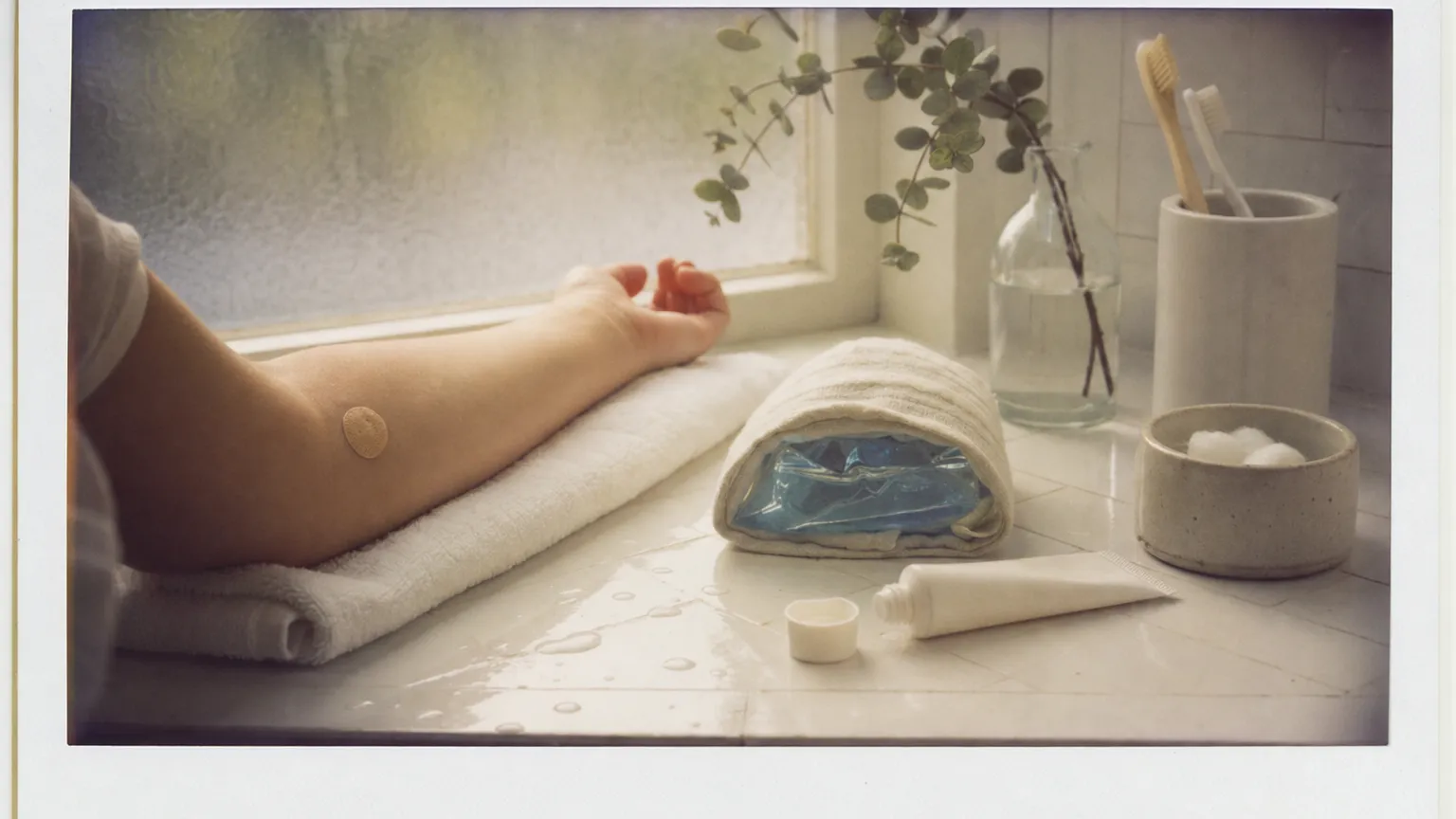
- Apply a cool compress wrapped in cloth for 10 to 15 minutes if it is sore or itchy.
- Watch it for 48 hours. Mark the edge of the redness with a pen if you are unsure whether it is spreading.
- Ask your pharmacist before using an oral antihistamine or a topical product, especially if you take other medicines.
- Use a different site next time. Labels advise rotating sites with each dose to reduce irritation.[1][4]
- Log it. Note the date, site and what happened, and tell your prescriber at your next visit, or sooner if it recurs.
How to reduce reactions
- Rotate every time, and keep each new site a few centimeters from the last.[4][6]
- Avoid scars, bruises and hard bumps.[4]
- Let alcohol dry fully before inserting the needle.[4]
- Use a new needle every time. Reused needles are blunter and unsterile.[7]
- Use the shortest suitable needle. Expert guidance says 4 mm pen and 6 mm syringe needles are less painful and reduce the risk of hitting muscle.[6]
- Let a refrigerated product reach room temperature if its label allows, since cold solutions can sting more.
- Inspect the solution. Do not inject anything cloudy or with particles.[4]
Our step-by-step guide to how to inject peptides subcutaneously covers technique in detail.
Lumps under the skin: lipohypertrophy
Repeated injections into the same small area can cause lipohypertrophy, a soft or rubbery thickening of fat. Expert recommendations describe it as a frequent complication of injection therapy that distorts absorption, say not to inject into these lesions, and say correct site rotation helps prevent them.[6] It usually improves slowly once you stop using that spot.
For GLP-1-specific skin issues, see Mounjaro skin sensitivity and GLP-1 injection sites.
Allergic reactions
Most injection site reactions are not allergies. But approved labels list hypersensitivity reactions, including rare serious ones: Wegovy reports anaphylaxis and angioedema,[2] and Egrifta SV tells patients to stop and seek immediate care if a hypersensitivity reaction is suspected.[4]
For more on side effects beyond the skin, see our overview of peptide side effects.