Quick answer: Mounjaro skin sensitivity usually means dysesthesia, a rare side effect in which the skin feels painful, burning, tingling or overly sensitive to touch. It was reported in 0.4% of people on Mounjaro in diabetes trials (none on placebo) and 0.2% to 0.4% on Zepbound (0.1% on placebo).[1][2] More common skin-related effects are injection site reactions, allergic rashes and hair loss.[2]
Mounjaro and Zepbound both contain tirzepatide. This guide covers each skin effect, how often it happens and what to do. For the drug itself, see our tirzepatide profile.
Skin-related side effects at a glance
| Effect | Mounjaro (diabetes trials) | Zepbound (weight trials) | Placebo |
|---|---|---|---|
| Dysesthesia (skin pain or abnormal sensation) | 0.4% at each dose[1] | 0.2% to 0.4%[2] | 0% to 0.1% |
| Injection site reactions | 3.2%[1] | 6% to 8%[2] | 0.4% to 2% |
| Allergic (hypersensitivity) reactions | 3.2%[1] | 5%[2] | 1.7% to 3% |
| Hair loss | Postmarketing reports[1] | 4% to 5%[2] | 1% |
Dysesthesia: when the skin itself hurts
Dysesthesia is an unpleasant abnormal sensation. People describe it as burning, prickling, tingling, or pain from a light touch or clothing.
- Mounjaro: in the pooled placebo-controlled diabetes trials, dysesthesia was reported by 0.4% of people on 5, 10 and 15 mg and by no one on placebo. In a large heart outcomes trial in type 2 diabetes, 0.7% reported it.[1]
- Zepbound: in the weight-loss trials, it occurred in 0.2% on 5 mg, 0.2% on 10 mg and 0.4% on 15 mg, versus 0.1% on placebo.[2]
- Case reports: a 2025 case report described dysesthesia and allodynia (pain from normally painless touch) in a patient on tirzepatide. The authors noted it appeared dose-related and resolved after stopping the drug, sometimes improving on its own over several weeks.[3]
Why does it happen? No one knows yet. The labels list dysesthesia as an observed side effect but do not explain it.[1][2] In the published case report, symptoms seemed to depend on the dose and eased once the drug was stopped, which points to a drug effect rather than a coincidence, but a single case cannot prove the cause.[3]
What to do:
- Tell your prescriber, especially if it started after a dose increase. A lower maintenance dose is an option on the Zepbound label if a higher dose is not tolerated.[2] See the tirzepatide dosage chart.
- Get checked for other causes. Numbness, tingling or burning can also come from diabetic nerve damage, low vitamin B12, shingles or other conditions.
- Seek prompt care if numbness or weakness is sudden, one-sided, or comes with a rash.
Injection site reactions
These are reactions where the needle goes in: redness, itching, swelling, bruising or a small lump.
- Mounjaro: 3.2% versus 0.4% on placebo.[1]
- Zepbound: 6% on 5 mg and 8% on 10 and 15 mg, versus 2% on placebo.[2]
- Antibodies: some people develop antibodies to tirzepatide. On Zepbound, injection site reactions occurred in 11.3% of people with these antibodies versus 1% of those without.[2]
- Real-world reports: in a 2026 analysis of more than 123,000 FDA adverse event reports for tirzepatide, injection site reactions were among the strongest signals, alongside medication errors.[5]
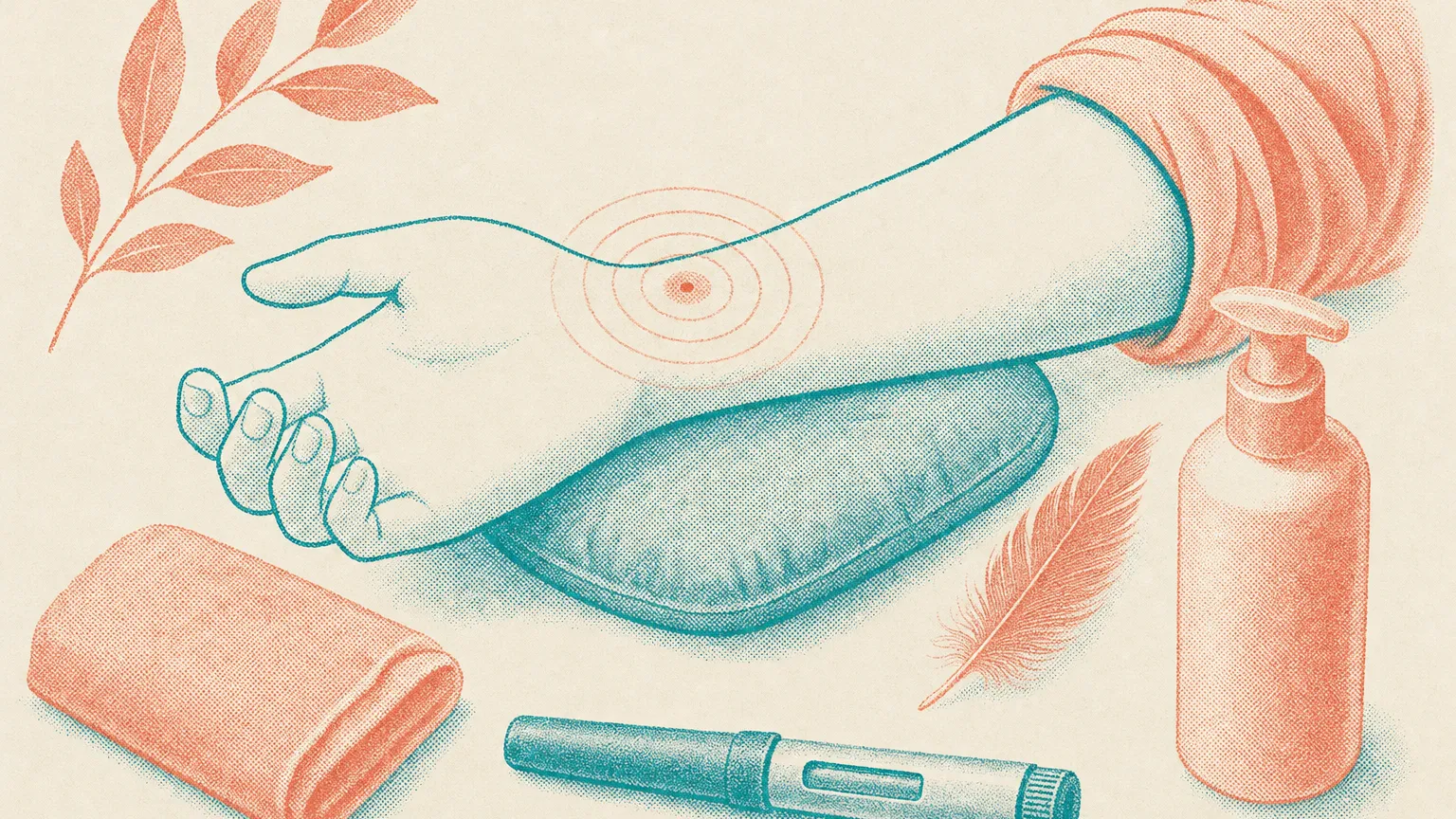
What helps: rotate between the abdomen, thigh and back of the upper arm, and use a different spot each week.[1] Follow the Instructions for Use for your presentation, and do not inject into skin that is tender, bruised, red or hard. Our guide to GLP-1 injection sites covers technique.
Allergic reactions and rashes
- How common: on Zepbound, reactions within one day of a dose occurred in 2.1% versus 0.4% on placebo, and later reactions in 3.5% versus 2.7%. Most were skin reactions such as rash and itching.[2]
- Serious reactions: severe reactions affected 0.1% in the Zepbound trials. Anaphylaxis and angioedema (swelling of the face, lips, tongue or throat) have been reported after approval.[2]
- Who should not use it: anyone who has had a serious allergic reaction to tirzepatide or its ingredients. Caution is advised if you have had anaphylaxis or angioedema with another GLP-1 drug.[2]
Hair loss
Hair loss is not a skin reaction, but it is often grouped with skin changes.
- Zepbound: 5% on 5 mg, 4% on 10 mg and 5% on 15 mg, versus 1% on placebo.[2]
- Mostly in women: 7.1% of women versus 0.5% of men on Zepbound.[2]
- Linked to weight loss: the label says hair loss was associated with weight reduction. No one on Zepbound stopped treatment because of it.[2]
- Mounjaro: alopecia is listed among postmarketing reports.[1]
Eating enough protein and following up with a clinician if shedding is heavy or lasts more than a few months can help rule out other causes, such as thyroid or iron problems. Hair shedding after rapid weight loss is often temporary. See our guide to GLP-1 hair loss for more.
Should you stop Mounjaro for skin problems?
It depends on the cause and severity:
- Mild injection site redness or itching: usually manageable by rotating sites. Mention it at your next visit.
- Skin pain or burning (dysesthesia): talk to your prescriber soon. Options may include staying longer on a dose, lowering the dose or stopping.
- Hives, spreading rash or swelling: contact a clinician the same day, or get emergency care for breathing or swallowing problems.
Do not restart tirzepatide after a serious allergic reaction.[2] For other common side effects, see Mounjaro sulfur burps, and for differences between the two brands, see Zepbound vs Mounjaro.