Quick answer: there is no published human study of NAD+ nasal spray, so nobody knows whether it works. The evidence comes from rats and mice, where NAD+ put into the nose raised brain NAD+ and reduced damage after stroke or brain injury.[1][2] When we searched PubMed and ClinicalTrials.gov in October 2026, we found no published or registered human trial of nasal NAD+.
This guide covers what nasal NAD+ is claimed to do, what the animal studies found, why absorption through the nose is uncertain, safety, legal status and better-studied alternatives. For background on the molecule, see our NAD+ profile and the NAD+ topic hub.
What NAD+ nasal spray is
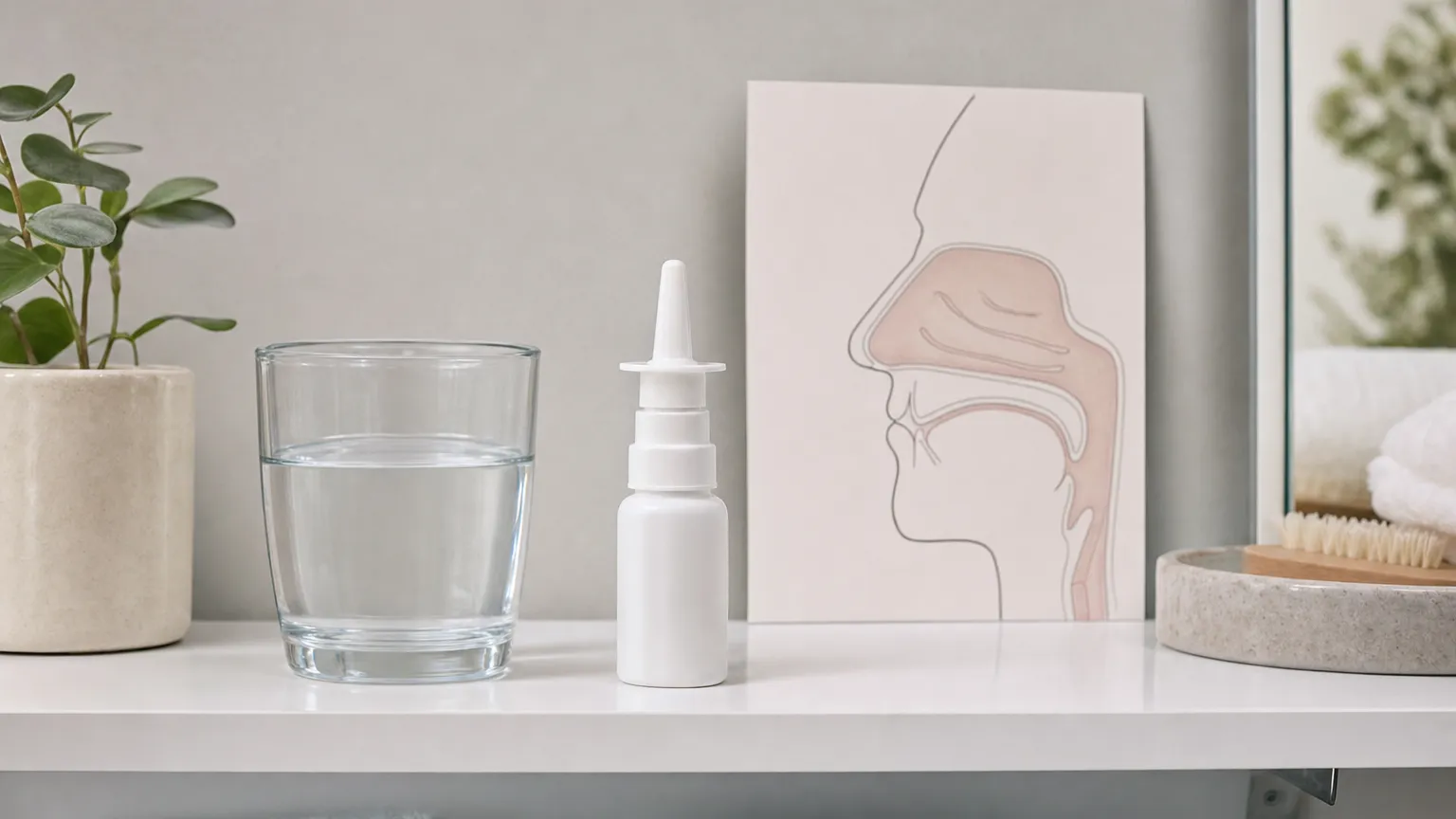
NAD+ (nicotinamide adenine dinucleotide) is a coenzyme found in every cell, where it helps turn food into energy. It is not a peptide. A nasal spray delivers a dissolved dose into the nose, where it can be absorbed through the lining of the nasal passages.
The appeal is convenience: no needle and no 1- to 6-hour IV drip. Sellers often add a second claim, that the nose offers a shortcut to the brain, bypassing the blood-brain barrier. That idea comes from animal research, described below.
What the animal studies found
All published research on NAD+ given through the nose is in animals:
| Study | Animal | Dose | Finding |
|---|---|---|---|
| Stroke model, 2007[1] | Rats | 10 mg/kg, 2 hours after stroke | Brain NAD+ rose; brain damage and neurological deficits fell |
| Brain injury model, 2012[2] | Rats | 20 mg/kg right after injury | Fewer dying neurons in the hippocampus, but not in the outer brain (cortex) |
| Loss of smell, 2026[3] | Mice, plus human cells in a dish | Not stated in the abstract | Better smell function and repair of the smell-sensing lining |
Three points stand out:
- These were emergency or injury models, not healthy animals taking NAD+ for energy or aging.
- Doses were per kilogram of body weight. Animal doses cannot be converted directly into a safe or effective human dose.
- In the stroke study, nasal nicotinamide did not help, while nasal NAD+ did, which suggests the form mattered in rats.[1]
The 2026 smell study is the closest to a human use: researchers grew human smell-sensing stem cells in the lab and found NAD+ helped them mature, then showed improved smell in mice with chemically induced smell loss.[3] It has not been tested in people with smell loss.
Can the nose absorb NAD+?
No study has measured how much NAD+ a person absorbs from a nasal spray. Two things suggest caution:
- Large, water-loving molecules cross the nasal lining poorly. As a comparison, GHRH(1-29), the hormone fragment sold as sermorelin, sprayed into the nose of healthy men had a bioavailability of only 3% to 5%, meaning most of the dose never reached the blood. A dose about 50 times larger was needed to match a small IV dose.[5] NAD+ is a different molecule, so this is only an analogy.
- The body clears NAD+ quickly. Even with an IV drip running straight into a vein, blood NAD+ did not rise for the first 2 hours in a pilot study, because it was removed as fast as it went in.[12]
If a spray works in people, it would have to overcome both problems. Until someone measures it, any stated nasal “absorption rate” is a guess.
Does it reach the brain in people?
The nose-to-brain claim rests on the 2007 rat study, where nasal NAD+ raised NAD+ in the brain.[1] No human imaging or spinal fluid study has tested nasal NAD+.
By contrast, a 2026 human study did measure brain NAD+ with oral precursors. In 12 people taking 1,200 mg a day of nicotinamide riboside (NR) or nicotinamide mononucleotide (NMN), blood NAD+ rose slowly and leveled off after about two weeks, and brain NAD+ rose measurably after four weeks.[9] So there is at least some human brain data for pills, and none for sprays.
It is also not clear that most people need a boost. A 2026 study of seven groups of people found whole-blood NAD+ stayed remarkably stable with age and lifestyle, changing only with NR supplementation.[10]
Side effects and safety
Side effects of NAD+ nasal spray have not been studied. What we can say:
- Nasal irritation is common with sprayed molecules. In a 6-month trial of nasal GHRH(1-29) in children, most reported sneezing right after spraying, a runny nose and mild burning, and two stopped treatment.[11] NAD+ may behave differently.
- IV side effects may not apply. The nausea and chest pressure reported with IV NAD+ drips come from large doses entering a vein quickly; a nasal dose is likely much smaller, but this has not been tested.
- Quality is unknown. Nasal NAD+ is not an approved drug, so there is no official standard for its strength, sterility or preservatives.
People with nasal conditions such as chronic sinusitis or nasal polyps, people who are pregnant or breastfeeding, and anyone using other nasal medicines should talk to a clinician first.
Is NAD+ nasal spray legal?
- Not FDA-approved in any form.
- Not a dietary supplement. FDA says dietary supplements must be swallowed, and that topical or inhaled products are not supplements.[6] A nasal spray is not swallowed.
- Compounding: FDA lists NAD among bulk substances still under evaluation for use by compounding pharmacies.[7] Compounded drugs are not FDA-approved, and FDA does not verify their safety, effectiveness or quality before they are marketed.[8]
This is general information, not legal advice. For how spray and injection routes compare for other compounds, see peptide nasal spray vs injection.
Better-studied alternatives
If your goal is to raise NAD+, the oral precursors NR and NMN have dozens of randomized human trials. They reliably raise blood NAD+ and were generally well tolerated, though effects on health outcomes were mixed and often null.[4] See our guide to NAD+ supplements vs injections, the amounts used in NAD+ dosage studies, and the evidence on NAD+ injections.
Questions to ask a clinician
- What evidence supports a nasal route for my goal?
- How much NAD+ is in each spray, and how was that amount chosen?
- Who makes the product, and how are its strength and sterility checked?
- Would an oral precursor with human data be a better first step?
- What symptoms should make me stop using it?
Talk to a licensed clinician before using any NAD+ product.