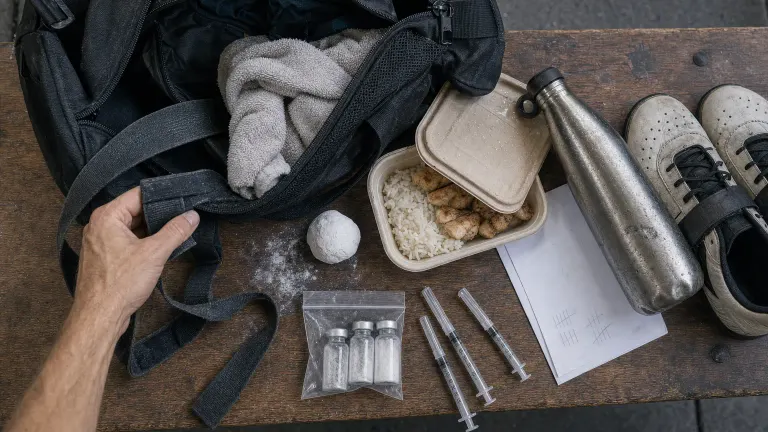
Quick answer: the WADA Prohibited List bans most of the peptides people ask about. On the 2026 Prohibited List, in force since January 1, 2026, BPC-157 is named under S0 (non-approved substances), while TB-500, GHRPs, CJC-1295, sermorelin, tesamorelin, ipamorelin, AOD-9604 and IGF-1 fall under S2 (peptide hormones, growth factors, related substances and mimetics). All are prohibited at all times, in and out of competition.[1] GLP-1 drugs such as semaglutide are not prohibited.[3]
This guide quotes the 2026 List section by section, explains what changes on January 1, 2027, and covers therapeutic use exemptions (TUEs) and how to check a product. For the broader legal picture, see our hub on FDA and peptide regulation and our guide to peptides in professional sports.
How the WADA Prohibited List works
The World Anti-Doping Agency (WADA) publishes the Prohibited List once a year as a mandatory International Standard under the World Anti-Doping Code. The 2026 List took effect on January 1, 2026, and the English text prevails if versions conflict.[1] National agencies such as USADA (United States) enforce it for athletes in Code-compliant sports.
Two terms matter:
- Prohibited at all times means banned both in competition and in out-of-competition testing.[1]
- Specified vs non-Specified. The List quotes the Code: Specified Substances are not “less important or less dangerous.” They are simply more likely to have been used for a reason other than performance. S0 substances are Specified; everything in S2 is non-Specified.[1]
S0: non-approved substances (where BPC-157 sits)
S0 is the catch-all. In the 2026 wording, it bans any pharmacological substance that is not covered by another section and has “no current approval by any governmental regulatory health authority for human therapeutic use.” Its examples include drugs in pre-clinical or clinical development, discontinued drugs, designer drugs and veterinary-only drugs.[1]
The 2026 text names BPC-157 as an example, alongside DNP, ryanodine receptor-1-calstabin complex stabilizers and troponin activators.[1]
S0 matters for peptides because many sold online have never been approved for people anywhere in the world. If a peptide is not listed elsewhere and has no human approval, S0 can still catch it. See our BPC-157 legal status guide for its separate FDA position.
S2: peptide hormones, growth factors and mimetics
S2 is where most performance-related peptides are named. The 2026 List says these substances, “and other substances with similar chemical structure or similar biological effect(s),” are prohibited.[1]
| 2026 section | What it covers | Peptide examples named in the List |
|---|---|---|
| S2.1 | EPO and agents affecting red blood cell production | Erythropoietins, darbepoetins, EPO-mimetics including peginesatide and pegmolesatide |
| S2.2.1 | Testosterone-stimulating peptides (in males) | Chorionic gonadotrophin (hCG), LH, GnRH (gonadorelin) and its analogues, kisspeptin and its agonist analogues |
| S2.2.2 | Corticotrophins and releasing factors | Corticorelin, tetracosactide |
| S2.2.3 | Growth hormone, analogues and fragments | Lonapegsomatropin, somapacitan, somatrogon; fragments AOD-9604 and hGH 176-191 |
| S2.2.4 | GH-releasing factors | GHRH analogues (CJC-1293, CJC-1295, sermorelin, tesamorelin); secretagogues (ibutamoren/MK-677, ipamorelin, ghrelin and others); GHRPs (GHRP-1 to GHRP-6, hexarelin, alexamorelin) |
| S2.3 | Growth factors and modulators | FGFs, HGF, IGF-1 and analogues, mechano growth factors (MGFs), PDGF, VEGF, thymosin beta-4 and derivatives such as TB-500 |
Source: WADA 2026 Prohibited List.[1]
Our profiles cover many of these, including TB-500, CJC-1295, ipamorelin, GHRP-2, GHRP-6, hexarelin, sermorelin, tesamorelin, MK-677, AOD-9604, IGF-1 LR3, PEG-MGF, hCG, gonadorelin and kisspeptin-10.
Note that tesamorelin and sermorelin are, or have been, approved medicines. Approval does not help here: they are named in S2, so they are banned for athletes regardless.[1]
Other sections that catch peptides
Some peptides and peptide-like compounds sit in S4 (hormone and metabolic modulators), which is also prohibited at all times:[1]
- S4.3, agents preventing activin receptor IIB activation, names decoy receptors such as ACE-031 and myostatin inhibitors.
- S4.4.1 names AMPK activators including AICAR and the mitochondrial peptide MOTS-c.
- S4.4.2 covers insulins and insulin-mimetics.
GLP-1 drugs: monitored, not banned
Semaglutide and tirzepatide are not on the Prohibited List. Semaglutide has been in WADA’s Monitoring Program, which lets labs track use without sanctions. From January 1, 2026, markers of both semaglutide and tirzepatide are monitored in and out of competition.[2] USADA lists both in the 2027 Monitoring Program too, so they stay permitted for 2027.[3]
What changes on the 2027 List
WADA has published the 2027 List, which takes effect on January 1, 2027. USADA says that on the 2027 List, “peptides” in general are now named as prohibited substances in the S0 class, and that BPC-157 stays prohibited under S0.[3] USADA’s message to athletes is that even if a peptide is not specifically named on the List, “utmost caution should be taken,” and it warns that the current “peptide craze” may pose serious anti-doping and health risks.[3]
Therapeutic use exemptions (TUEs)
A TUE lets an athlete use a prohibited substance for a genuine medical need. USADA says its committee looks for a confirmed diagnosis that requires the prohibited medicine, no performance gain beyond a return to normal health, and no permitted alternative that would work.[4]
In practice:
- Approved medicines in S2, such as hCG or tesamorelin, can be considered for a TUE when prescribed for a diagnosed condition.
- Non-approved peptides such as BPC-157 have no recognized medical use and no clinical evidence base, so they are very unlikely to meet the criteria. This is our reading of the criteria, not a WADA ruling.
- Retroactive TUEs are allowed only in limited situations, such as emergency treatment. USADA also offers a TUE Pre-Check form and replies in 3 to 5 business days on whether a TUE is needed.[4]
How to check a peptide before you use it
- Look for the substance in the current year’s WADA List, not last year’s.[1]
- Search Global DRO by brand name or ingredient, but remember it is not complete for peptides.[3]
- Contact your national anti-doping agency or use USADA’s TUE Pre-Check.[4]
- Be wary of supplements and “research” products. Labels may be wrong; see research use only peptides and buying peptides online.
Anti-doping rules are separate from drug law. A peptide can be legal to prescribe in your country and still be banned in sport. For the legal side, see are peptides legal? This is general information, not legal advice; athletes facing a test result or hearing should contact their anti-doping agency and a sports lawyer.