Peptides for under eye creams can modestly smooth fine lines, but the evidence comes from small, short trials, many run with the product maker: argireline reduced roughness around the eyes in a 60-person placebo-controlled study, and peptide eye creams smoothed crow’s feet over 4 weeks in split-face trials of 35 to 42 women.[5][3] For dark circles and bags, which have structural causes, expect little from any cream, and a 2026 review notes that most periocular product studies are short-term and industry-sponsored.[2]
This guide explains what is behind under-eye concerns, what the peptide trials show and when to see a professional. For more on peptides, see our peptide basics hub.
Evidence-graded table
| Peptide or treatment | Evidence level | What was shown | FDA status | Our profile |
|---|---|---|---|---|
| Tretinoin 0.02% (prescription) | FDA-approved for this use | Approved to soften fine facial wrinkles[10] | Approved (Rx) | None |
| Dermal fillers (for hollows) | FDA-approved devices for specific areas | Effects vary by product and area[11] | Approved as devices; check the approved area | None |
| Argireline (acetyl hexapeptide-3) | Human RCTs (small) | 48.9% improved vs 0% on placebo in 60 people over 4 weeks[5] | Cosmetic ingredient | SNAP-8 (related) |
| Palmitoyl pentapeptide-4 (Matrixyl) | Human RCTs (small) | Better crow’s feet results than argireline or placebo in 21 women[4] | Cosmetic ingredient | None |
| Multi-ingredient peptide eye creams | Human RCTs (split-face, short) | Smoother crow’s feet at 4 weeks[3] | Cosmetic | None |
| Acetyl octapeptide-3 microneedle patch | Small human studies | Wrinkle improvement vs placebo patch in 24 people[8] | Cosmetic | SNAP-8 |
| Peptide creams for dark circles or puffiness | Small human studies (uncontrolled) | Before-and-after gains, no control group[7] | Cosmetic | None |
Results come from different groups of people and are not head-to-head comparisons.
What causes under-eye wrinkles, bags and dark circles
The skin under the eyes is the thinnest on the face. Different concerns have different causes, and that matters for what can help.
An evidence review classifies dark circles by cause: shadowing from hollows or puffiness, visible blood vessels, excess pigment, marks left after inflammation, and constitutional (inherited) patterns.[1]
- Fine lines and crow’s feet come from sun damage, collagen loss and repeated muscle movement. Creams have the best chance here.
- Hollows and shadows are structural. Creams cannot add volume.
- Bags usually reflect fat pads pushing forward or fluid retention.
- Pigment may respond to sun protection and lightening agents.
What the peptide eye cream trials show
Argireline. In a randomized trial of 60 Chinese adults with wrinkles around the eyes, argireline or placebo was applied twice daily for 4 weeks (3:1 ratio). On a global rating, 48.9% of the argireline group improved versus 0% on placebo, and skin-replica roughness fell.[5]
Matrixyl vs argireline. In an 8-week double-blind trial of 21 Indonesian women, palmitoyl pentapeptide-4 appeared to perform better than acetyl hexapeptide-3 and placebo for crow’s feet. The authors called it an initial study needing more participants.[4] Compare the two in Matrixyl vs argireline.
Multi-ingredient eye creams. Two split-face trials (42 and 35 women) tested products with niacinamide, the peptides Pal-KT and Pal-KTTKS, and carnosine; the eye cream also had caffeine. After 4 weeks, pooled data showed smoother skin and shallower large wrinkles than no treatment.[3] With so many ingredients, the peptides’ share is unknown.
Newer formulas. A 12-week study of an eye cream with palmitoyl tripeptide-1, palmitoyl tetrapeptide-7 and other actives reported better hydration and elasticity compared with baseline.[6] A 22-person, 12-week study of an eye product with the peptide OS-01 reported less puffiness and fewer dark circles on expert grading, but had no control group.[7]
Microneedle patches. Dissolving patches can carry peptides past the skin’s outer barrier. In 24 people, an overnight patch with acetyl octapeptide-3 improved eye wrinkles more than a plain hyaluronic acid patch over 28 days.[8] See SNAP-8 vs argireline for more on this peptide.
Why results are modest
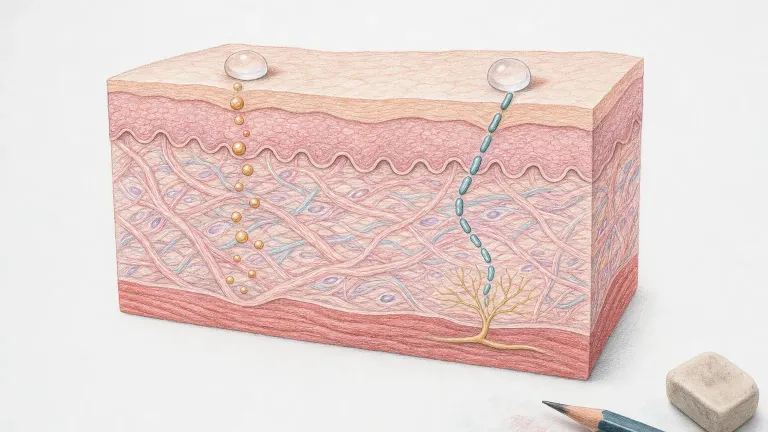
Most anti-wrinkle peptides are large and water-loving, so they struggle to penetrate deep enough into skin to reach their targets without special delivery methods.[9] A 2026 review of eye-area products adds that most studies test finished multi-ingredient formulas rather than single ingredients, run for a short time, are industry-sponsored and include limited diversity of participants.[2]
Our guides on peptide cream vs serum and Matrixyl research explore delivery and formulation.
How to use an eye cream
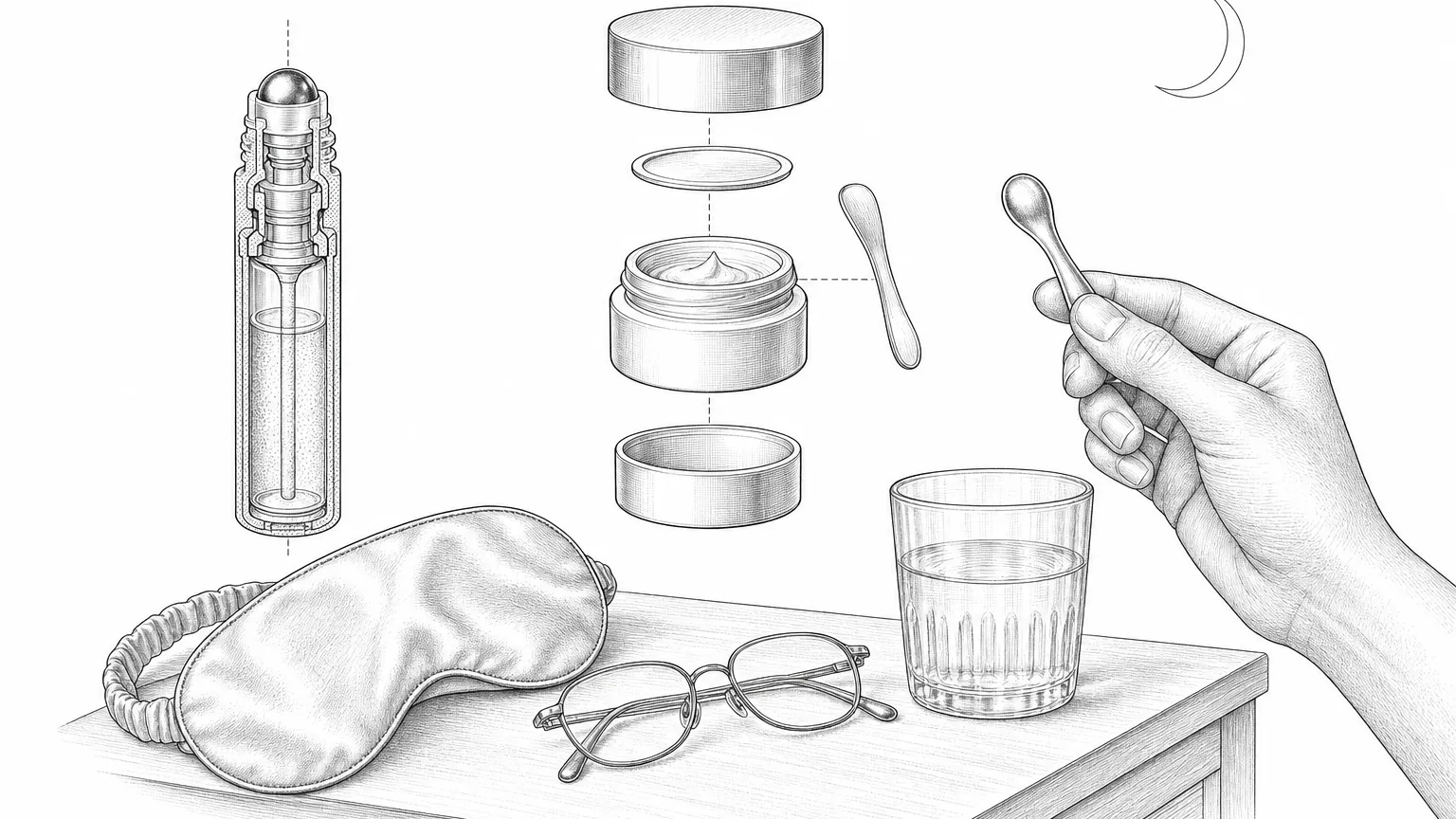
- Use a small amount, about the size of a grain of rice per eye, patted along the orbital bone rather than on the lid.
- Apply at night if the product contains a retinoid, and use sunscreen and sunglasses by day.
- Introduce one product at a time. Eye-area skin reacts easily, and multi-ingredient creams make it hard to tell what caused irritation.
- Check what else is in it. Caffeine, niacinamide and antioxidants often appear alongside peptides in tested eye creams, so a good result may not come from the peptide.[3]
- Be patient but realistic. Trials ran 4 to 12 weeks; judge the product at about 3 months.[3][6]
Price is not a reliable guide. Eye creams often contain similar actives to face creams in smaller jars, and no study has shown a dedicated eye product outperforms a gentle face moisturizer with the same peptide.
Realistic expectations and when to see a professional
- Expect: slightly smoother fine lines and better hydration after 4 to 12 weeks.
- Don’t expect: filled hollows, removed bags or erased dark circles.
- Proven options: sunscreen and a prescription retinoid for fine lines.[10] For hollows, dermal fillers are FDA-regulated devices approved for specific areas. FDA warns that injection into a blood vessel can cause skin blanching, vision changes or stroke-like symptoms, so choose a trained provider and ask which product is approved for the area.[11]
Eye creams are cosmetics. Under FDA rules, products that claim to change skin structure would be drugs, so labels speak of “the look of” lines and puffiness.[12]
The bottom line
Peptide eye creams can be a gentle addition for fine lines, with small, slow effects. They will not fix hollows or bags. Match the treatment to the cause, protect the area from sun, and treat bold before-and-after claims with caution.