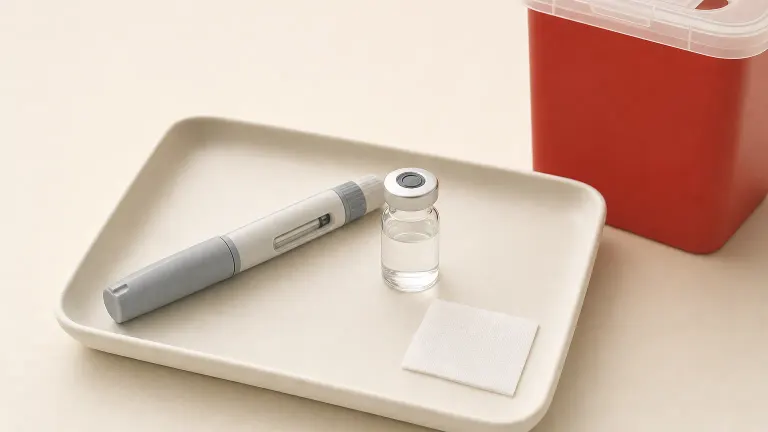
Peptide clinic lab tests have two jobs: checking that a treatment is safe for you before you start, and tracking its effects once you do. For GLP-1 drugs like semaglutide, that usually means blood sugar and kidney checks;[1] for growth hormone-releasing peptides like tesamorelin, it means IGF-1 and glucose monitoring.[2] What labs can’t do is show that an unproven peptide is safe or effective, and some tests marketed with peptide programs add cost without changing decisions.
This guide explains the common tests, why clinicians order them, and the questions to ask. It’s general information; your clinician decides which tests you need. For background, see the peptide basics hub and our beginner’s guide to peptides.
Why labs matter in peptide therapy
Medical boards expect lab results to be part of a proper medical record, and they say prescribers should refer patients for labs or other testing when medically indicated.[6] Good labs answer specific questions:
- Is there a condition that makes this drug risky for me?
- Do I actually have the condition this drug treats?
- Is the drug having the expected effect, or an unwanted one?
If a clinician can’t say what decision a test will change, ask why it’s being ordered.
Bring any recent results from your primary care doctor. Repeating a test you had last month rarely adds information, and sharing results keeps your records connected, which matters when a clinic, a telehealth prescriber and your regular doctor each see only part of the picture.
Common lab tests and what they’re for
| Test | What it measures | Why a clinician might order it |
|---|---|---|
| A1C | Average blood sugar over 2 to 3 months | Diagnose prediabetes (5.7% to 6.4%) or diabetes (6.5% or higher)[5]; track GLP-1 effects; watch for glucose rises on growth hormone peptides |
| Fasting glucose | Blood sugar after an overnight fast | Same purpose; 126 mg/dL or higher suggests diabetes[5] |
| Kidney function (creatinine, eGFR) | How well kidneys filter | Baseline before GLP-1 drugs; recheck if vomiting or diarrhea could cause dehydration[1] |
| Lipid panel | Cholesterol and triglycerides | Weight-related heart risk; tesamorelin lowered triglycerides in its main trial[3] |
| IGF-1 | The main marker of growth hormone activity | Monitoring growth hormone-releasing peptides[2] |
| Liver tests | Liver enzymes | General screening; part of a basic metabolic workup |
| Complete blood count | Blood cells | General screening |
GLP-1 drugs: semaglutide and tirzepatide
The Wegovy label calls for monitoring blood glucose before and during treatment in people with diabetes, and for checking kidney function in people whose side effects could lead to dehydration, especially when starting or increasing the dose.[1] People with a history of diabetic retinopathy need eye monitoring, and resting heart rate should be checked at regular intervals.[1] Tirzepatide is monitored in a similar way.
Two tests are often asked about but usually not needed:
- Calcitonin or thyroid ultrasound. The label says routine monitoring is of uncertain value for early detection of medullary thyroid cancer and may lead to unnecessary procedures.[1] Your personal and family history matters more.
- Lipase. The label doesn’t call for routine lipase checks and says the meaning of lipase rises without pancreatitis symptoms is unknown. Severe, persistent abdominal pain is the warning sign to act on.[1]
Growth hormone-releasing peptides
Tesamorelin is the FDA-approved example, for excess belly fat in adults with HIV-related lipodystrophy. Its label says to:
- Check glucose status before starting, and monitor periodically for impaired glucose tolerance or diabetes.[2]
- Monitor IGF-1 during treatment, and consider stopping if it stays persistently high, especially if the response isn’t strong.[2]
In the main 26-week trial, IGF-1 rose 81% on tesamorelin, while visceral fat fell 15.2%.[3] Clinics often apply similar monitoring to unapproved growth hormone peptides such as ipamorelin and CJC-1295, but no label or trial sets a schedule for them. FDA lists ibutamoren (MK-677) among compounding substances that may pose significant safety risks.[8]
A low IGF-1 isn’t a diagnosis
Some clinics use a single IGF-1 result to suggest a growth hormone problem that peptides can fix. The Endocrine Society’s guideline says adult growth hormone deficiency usually needs to be confirmed with a stimulation test, unless there’s a proven genetic or structural cause.[4] IGF-1 naturally falls with age and varies between labs, so a “low-normal” result on its own doesn’t justify treatment. See peptides vs HGH for how approved growth hormone therapy differs.
Unapproved peptides: what labs can and can’t do
For peptides like BPC-157 and TB-500, general blood tests can screen your overall health before you try anything. They can’t confirm the product contains what the label says, and they can’t detect rare or long-term harms. Product quality is a separate question; our guide to compounded vs research-grade peptides covers it.
Questions to ask about your labs
- What is each test for, and what result would change my treatment?
- Is this test covered by insurance, or is it part of the clinic’s package price?
- When will tests be repeated?
- Can I get copies of my results and the reference ranges?
- Who will review abnormal results, and how quickly?
Red flags
- Large “optimization” panels with no clear reason for each test.
- Results labeled “suboptimal” while still inside the normal range, used to sell a product.
- Labs ordered once and never repeated, even for hormone-active peptides.
- No one with prescribing authority reviews the results.
Our guides to choosing a peptide clinic and peptide clinic vs DIY cover what good supervision looks like.
Checklist: labs before and during peptide therapy
- I know why each test was ordered.
- Baseline blood sugar and kidney function checked if starting a GLP-1 drug.
- IGF-1 and glucose plan agreed if starting a growth hormone peptide.
- Any thyroid cancer history shared with my clinician.
- Repeat testing schedule written down.
- Copies of my results saved.
The bottom line
The right lab tests depend on the peptide. Approved drugs come with label-based monitoring that clinicians should follow. Unapproved peptides don’t have a proven monitoring plan, and normal lab results can’t make them safe. Ask what each test is for, keep copies, and be wary of panels designed to sell rather than to guide care.