Quick answer: GLP-1 nausea is the most common side effect of these drugs. It was reported by 44% of adults on Wegovy 2.4 mg (16% on placebo) and 25% to 29% on Zepbound (8% on placebo), and it usually shows up in the days after starting or raising the dose and then eases over the following weeks.[1][2] Most cases are mild to moderate, and few people stop treatment because of it.[5]
This guide covers how common nausea is on each drug, why it happens, how long it tends to last, what helps, and when to call your doctor. For background on the drug class, see our GLP-1 basics hub, and our profiles of semaglutide and tirzepatide.
How common is nausea on GLP-1 drugs?
The numbers below come from the placebo-controlled trials in each FDA label. Rates depend on the dose, the population and how the trial was run, so they are a rough guide rather than a head-to-head ranking.
| Drug (dose) | Nausea on drug | Nausea on placebo | Population |
|---|---|---|---|
| Wegovy 2.4 mg weekly | 44% | 16% | Adults with obesity or overweight |
| Wegovy 7.2 mg weekly | 39% | 13% | Adults with obesity |
| Zepbound 5 / 10 / 15 mg weekly | 25% / 29% / 28% | 8% | Adults with obesity or overweight |
| Ozempic 0.5 / 1 mg weekly | 15.8% / 20.3% | 6.1% | Adults with type 2 diabetes |
| Mounjaro 5 / 10 / 15 mg weekly | 12% / 15% / 18% | 4% | Adults with type 2 diabetes |
Sources: Wegovy, Zepbound, Ozempic and Mounjaro labels.[1][2][3][4]
Wegovy tablets (oral semaglutide 25 mg daily) showed a similar pattern: the label says the types and frequency of common side effects were similar to those seen with the injection.[1]
Weight-loss doses tend to cause more nausea than the lower doses used for diabetes. In Wegovy’s weight-loss trials, 73% of people on the drug had some gastrointestinal side effect, compared with 47% on placebo, and 4.1% had a severe one.[1]
Why GLP-1 drugs cause nausea
GLP-1 receptor agonists act on the brain’s appetite centers and slow how fast food leaves the stomach. Both effects help with weight loss, but a stomach that empties more slowly can feel full, queasy or bloated, especially after a large or fatty meal. The labels note that this slowing of stomach emptying is part of how the drugs work.[1][2]
Nausea is also linked to how fast the dose rises. That is why every label starts low and increases in steps, usually every 4 weeks.[1][2]
How long does GLP-1 nausea last?
There is no fixed timeline, but the trial data point to a clear pattern:
- It clusters around dose changes. The Zepbound and Mounjaro labels say most nausea, vomiting and diarrhea happened during dose escalation and decreased over time. Wegovy’s label says the same for its gastrointestinal reactions.[1][2][4]
- It is usually short-lived. A pooled analysis of the STEP 1-3 trials found that most gastrointestinal side effects with semaglutide 2.4 mg were non-serious (99.5%), mild to moderate (98.1%) and transient.[5]
- It often settles on a stable dose. In STEP 4, people who had already reached 2.4 mg tolerated continued treatment well.[5]
In practice, many people notice nausea for a day or a few days after each weekly injection early on, and less as their body adjusts. If it lasts for weeks without improving, or gets worse, talk to your prescriber.
How to manage nausea on Wegovy, Ozempic or Zepbound
A 2022 expert consensus on managing GLP-1 side effects recommends practical eating changes and careful dose escalation.[6] Common suggestions include:
- Eat smaller meals and stop when you first feel full, rather than finishing the plate.
- Eat slowly and avoid lying down right after eating.
- Limit fatty, fried, very sweet or spicy foods, which sit in the stomach longer.
- Sip fluids through the day to stay hydrated, especially if you are vomiting or have diarrhea.
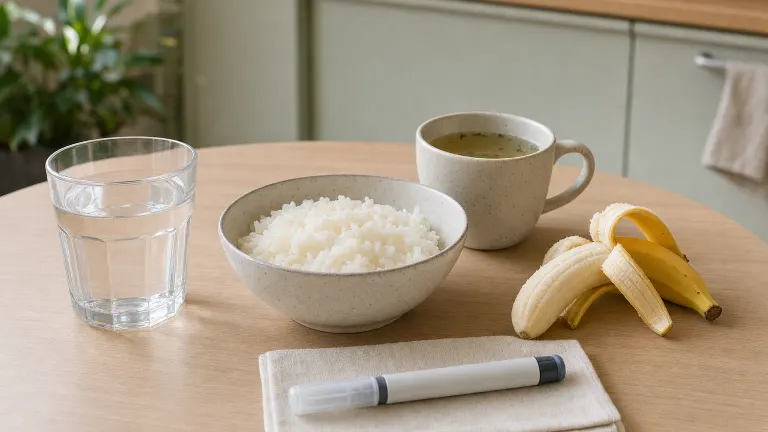
- Choose bland foods such as toast, crackers, rice or soup on rough days.
- Go easy on alcohol, which can add to stomach upset. See our guide to GLP-1s and alcohol.
Your prescriber has more options. Wegovy’s label says that if a dose is not tolerated during escalation, a clinician can consider delaying the next increase for 4 weeks, and a lower maintenance dose can be used if needed.[1] The Zepbound label also allows maintenance at 5 mg, 10 mg or 15 mg based on tolerability.[2] A clinician may also prescribe an anti-nausea medicine. Do not skip or split doses on your own; check our GLP-1 dose conversion chart only as background, since your clinician sets the dose.
When to call a doctor
Nausea is common, but some symptoms need attention. The labels warn about dehydration that can lead to kidney injury, as well as pancreatitis and gallbladder disease.[1][2] Contact your clinician or seek care if you have:
- Vomiting that stops you keeping fluids down for a day, or signs of dehydration (very dark urine, dizziness when standing, little or no urination).
- Severe or persistent belly pain, especially pain that spreads to your back (a possible sign of pancreatitis).
- Pain in the upper right belly, fever, or yellowing of the skin or eyes (possible gallbladder problems; see our guide to GLP-1s and the gallbladder).
- Nausea with severe constipation or a swollen, hard belly.
- Nausea before planned surgery or sedation, which matters for safety (see stopping GLP-1s before surgery).
Wegovy and Zepbound are not recommended for people with severe gastroparesis, a condition where the stomach empties very slowly.[1][2]
Other side effects that come with nausea
Nausea rarely travels alone. Fatigue, headache, heartburn and burping are also listed in the labels. Read more in our guides to GLP-1 fatigue, GLP-1 headaches and semaglutide heartburn.
This article is for general information. Your prescriber sets your dose and can tailor a plan if nausea is getting in the way of treatment.